
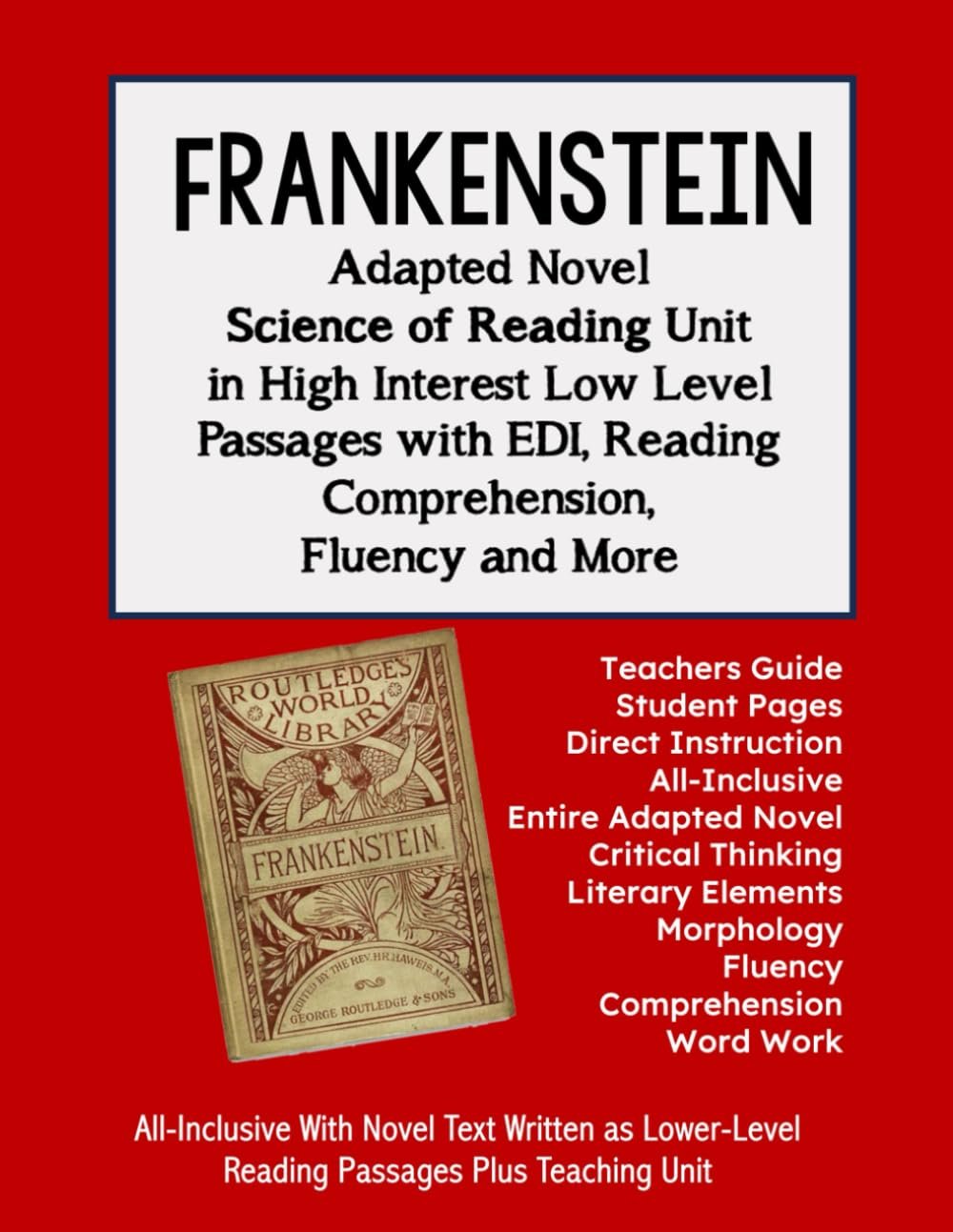
Engaging with "Frankenstein Adapted Novel Science of Reading Unit": A Personal Review
Ah, Mary Shelley’s Frankenstein! A classic that has long captured the imaginations of readers and thinkers alike. Yet, for many students, the original text can be daunting, often alienating those who need a more approachable format. That’s where the Frankenstein Adapted Novel Science of Reading Unit steps in—a creative bridge that allows struggling readers access to this iconic tale without the overwhelming complexity of traditional literature.
As I dove into this novel unit, I couldn’t help but admire the thoughtful design aimed specifically at high interest, low-level readers. The passages cleverly maintain the essence of Shelley’s themes of ambition, creation, and the profound consequences of isolation, while being tailored for comprehension. The unit captures the heart of Frankenstein, offering a rich narrative in a format accessible to those who often shy away from reading.
One of the standout features of this resource is its emphasis on scaffolding. The passages range from reading levels 1.7 to 2.9, seamlessly guiding students through the content with careful repetition of vocabulary and the introduction of literary elements. This approach is not just effective; it’s empowering. Struggling readers can engage meaningfully with the characters like Victor Frankenstein and his tragic creation, the Creature, without feeling daunted by advanced language.




Moreover, the unit includes explicit lessons in morphology and thematic elements, along with comprehension checks that allow for progress tracking. This level of detail not only aids in engagement but fosters a deeper understanding of literary devices. Imagine a reluctant reader, who might typically resist reading, experiencing those “aha” moments when connecting the dots of dramatic irony or character motivations! It’s truly a joy to envision.
While the content is thoughtful, the aesthetic appeal also makes a difference. The Google Slide links to the EDI lessons are a modern touch, enhancing the learning experience through interactive engagement. It’s a blend of traditional literature with contemporary teaching techniques, ensuring that students remain invested.
One quote from the unit that resonated with me was a simple yet profound line reflecting the theme of creation: “Every creator’s journey is fraught with risk.” This statement encapsulates the very essence of Frankenstein, serving not only as a reminder of the narrative but also as a powerful lesson for young learners about the importance of perseverance and grappling with the consequences of one’s creations.
In conclusion, I wholeheartedly recommend the Frankenstein Adapted Novel Science of Reading Unit for educators seeking to engage reluctant readers with classic literature. This unit is not just a resource; it’s a lifeline for students who feel disconnected from traditional texts. If you’re an educator, a parent, or even a passionate reader wishing to inspire the next generation, this adaptable unit could be your guide. The experience of navigating Frankenstein in this thoughtful manner truly highlights how literature can transform and connect us. As I closed the last page, I couldn’t help but feel hopeful—if Shelley’s tale can be made accessible, what other literary worlds await discovery?