
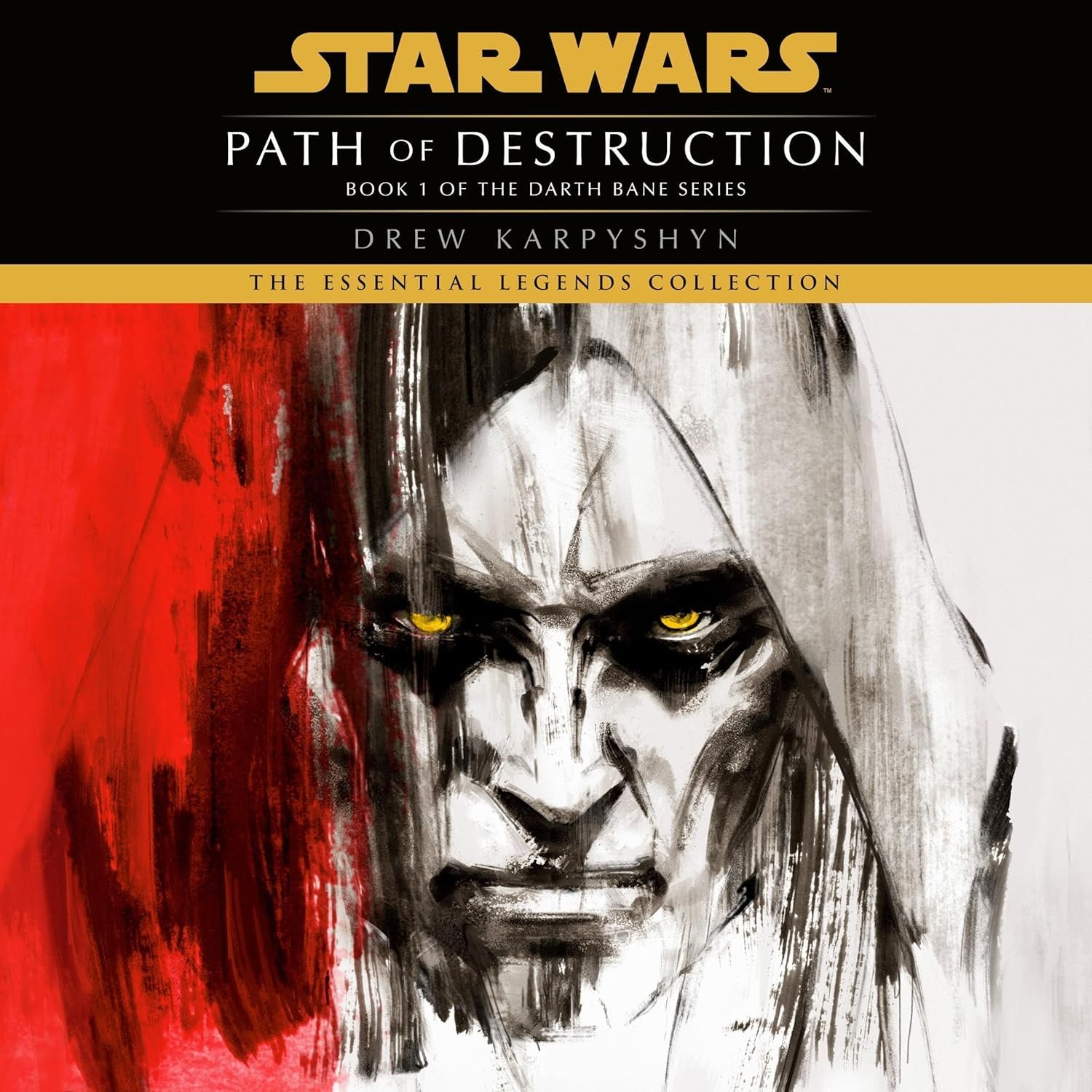
A Journey to the Dark Side: My Thoughts on Path of Destruction: A Novel of the Old Republic
As a longtime Star Wars devotee, whenever a new tale from that galaxy far, far away comes along, I can’t help but feel a rush of anticipation. When I first stumbled upon Path of Destruction by Drew Karpyshyn, the promise of delving into the origin story of Darth Bane—a character I’ve always found intriguing—pulled me in like a tractor beam from a Star Destroyer. This novel is not just another addition to the vast Star Wars universe; it’s a rich exploration of what it means to embrace darkness and the cost associated with power.
The story begins with Dessel, a miner from the harsh world of Apatros, who finds himself fleeing from the relentless grip of the Republic. From the get-go, Karpyshyn does a masterful job of laying a foundation for Dessel’s transformation into Darth Bane, allowing readers to witness his evolution from an underdog to a figure of formidable power. I was particularly struck by how Karpyshyn fleshes out Dessel’s character—his raw brutality, cunning, and extraordinary connection to the Force feel palpable. Readers, including myself, can empathize with his struggles and desires, making him an appealing antihero in a galaxy often dominated by clear heroes and villains.




One of the notable themes that resonated with me is the philosophical exploration of power and ambition. The novel delves into Sith ideologies, challenging traditional views of the Force. Instead of merely depicting the Sith as reckless villains, Path of Destruction presents a nuanced perspective on why one might be drawn to the dark side. Bane’s journey to establish the “Rule of Two” struck me as a deeply compelling narrative arc, encapsulating a battle not just with external foes but also within his own psyche. This complexity adds depth to his character, making the reader ponder the nature of power and the sacrifices one must make to obtain it.
However, I must address the pacing. Some readers may find the initial chapters slow, which I initially did. But as I pressed on, the tension gradually built into an adrenaline-fueled climax, filled with gripping battles and strategic machinations that kept me on the edge of my seat. I also appreciated the vivid descriptions of the settings, from the grimy mining world to the ominous Sith academy. Each location feels alive, contributing to the overall tone of foreboding.
What truly stood out were Bane’s interactions with other characters, particularly the rivalries and friendships formed at the Sith academy. The author cultivates a thrilling atmosphere of cutthroat competition that gives readers insight into the ruthless world of the Sith. While I found Bane’s character arc captivating, I couldn’t help but wish for a stronger secondary character to contrast against him. Nevertheless, minor characters like Githany do provide some interesting dynamics within the story.
In conclusion, Path of Destruction is perfect for Star Wars fans intrigued by the darker side of the Force and anyone who enjoys character-driven storytelling with moral dilemmas. For those who have been dissatisfied with other parts of the expanded universe, this novel serves as a refreshing and thought-provoking journey. It left me pondering the intricate dance between light and dark long after the final page turned. If you’re looking for a book that melds thrilling action with philosophical depth, questioning what it means to wield power, then grab your lightsaber—er, I mean, this book—and prepare for an unforgettable adventure!
You can find Path of Destruction: A Novel of the Old Republic here >>