
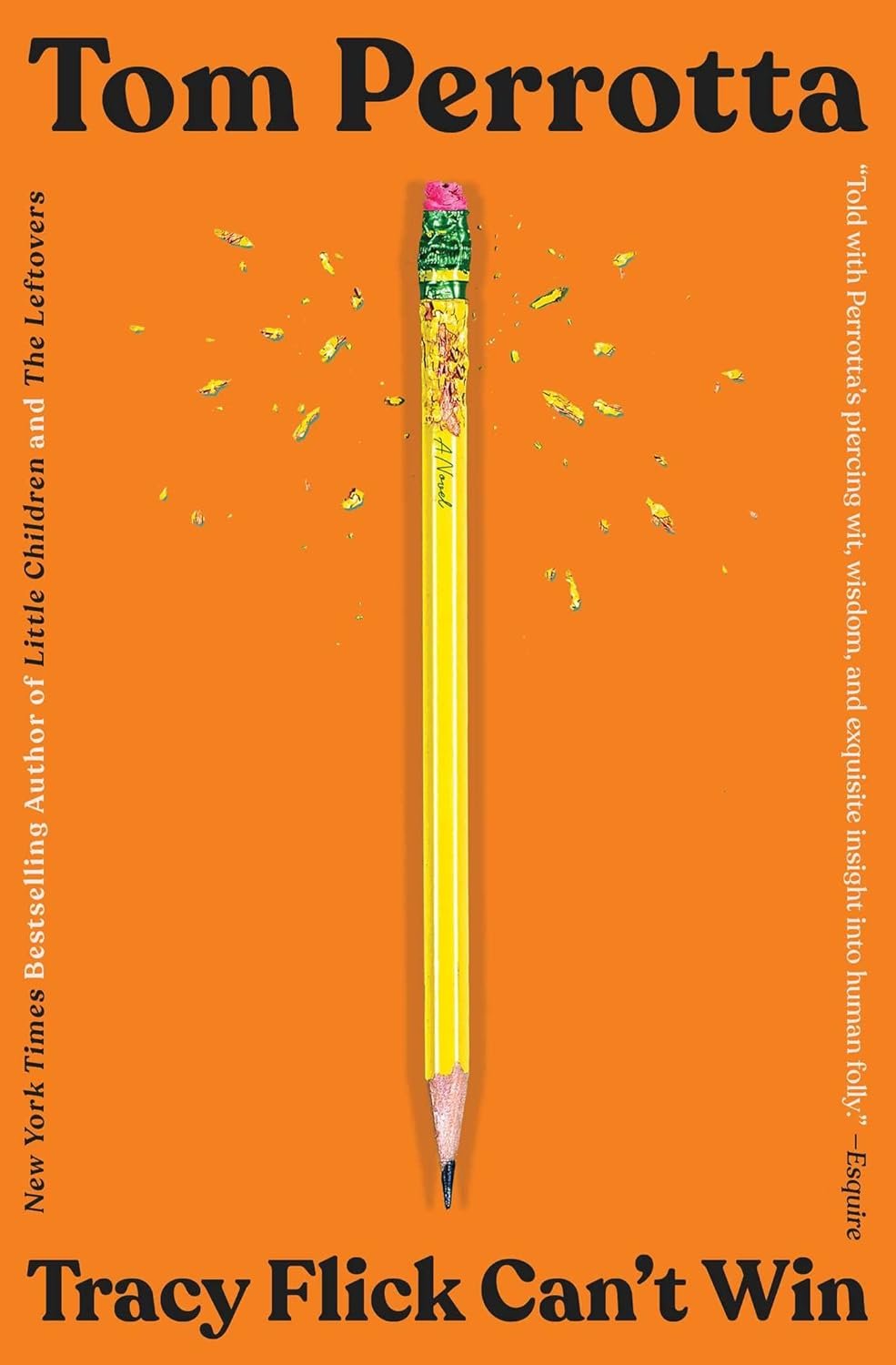
A Personal Reflection on Tracy Flick Can’t Win: A Novel by Tom Perrotta
As a long-time fan of Tom Perrotta’s knack for peeling back the layers of suburban life, I was both excited and a little anxious to dive into Tracy Flick Can’t Win. Tracy Flick, after all, is a character we’ve followed since her high school days in Election, and I wondered how she’d evolve in this new chapter of her life. Would she still be the relentless overachiever we once knew, or would the years have rendered her a cautionary tale of unfulfilled ambition?
In Tracy Flick Can’t Win, we find Tracy navigating the choppy waters of midlife, working as an assistant principal in suburban New Jersey. She’s ambitious as ever, but now she faces the dual challenges of reclaiming her rightful place in an institution that seems to dismiss her talent, all while juggling her role as a mother and her personal life. The news of her principal’s retirement sparks a flicker of hope as she vies for the top position, only to discover that the school board doesn’t quite share her enthusiasm.
Perrotta’s exploration of themes like ambition, gender dynamics, and the bittersweet nostalgia of adulthood resonated deeply with me. Tracy’s experiences echo the frustrations many of us feel when our past and present collide—when we realize life can sometimes feel like a high school drama, complete with cliques and unspoken rules. The narrative shifts perspectives, giving us insight into characters like Jack Weede, the retiring principal, and Vito Falcone, a former football star facing the consequences of his past—a poignant reminder that everyone is dealing with their own baggage.






The writing in Tracy Flick Can’t Win is sharp and laden with dark humor, capturing both the absurdity of Tracy’s circumstances and the rawness of her emotions. Her introspective monologues reveal layers of vulnerability, making her a character I found myself rooting for, even during her most unlikable moments. Perrotta’s ability to evoke empathy for flawed characters is truly a hallmark of his style.
One of my favorite moments includes Tracy reflecting on her tumultuous high school days and the impact of the #MeToo movement on how she perceives her past. It exemplifies the subtle poignancy that Perrotta excels at. The Taylor Swift quote opening the book intrigued me: “Now we got bad blood.” It set the tone for the complications ahead, reminding us that the scars of youth can linger well into adulthood.
I believe this novel will resonate with readers who appreciate character-driven stories about the complexities of life beyond high school. For anyone navigating their own adult challenges—whether in the realms of work, relationships, or self-discovery—Tracy Flick’s journey offers both humor and heartache in equal measure.
In the end, Tracy Flick Can’t Win left me contemplating the fine line between ambition and satisfaction and how sometimes, despite our best efforts, “winning” can be a moving target. It’s a compelling return to a character who feels as relevant and relatable as ever, and perhaps even a little more human. I found it both refreshing and thought-provoking—an experience I wouldn’t have traded for the world.