
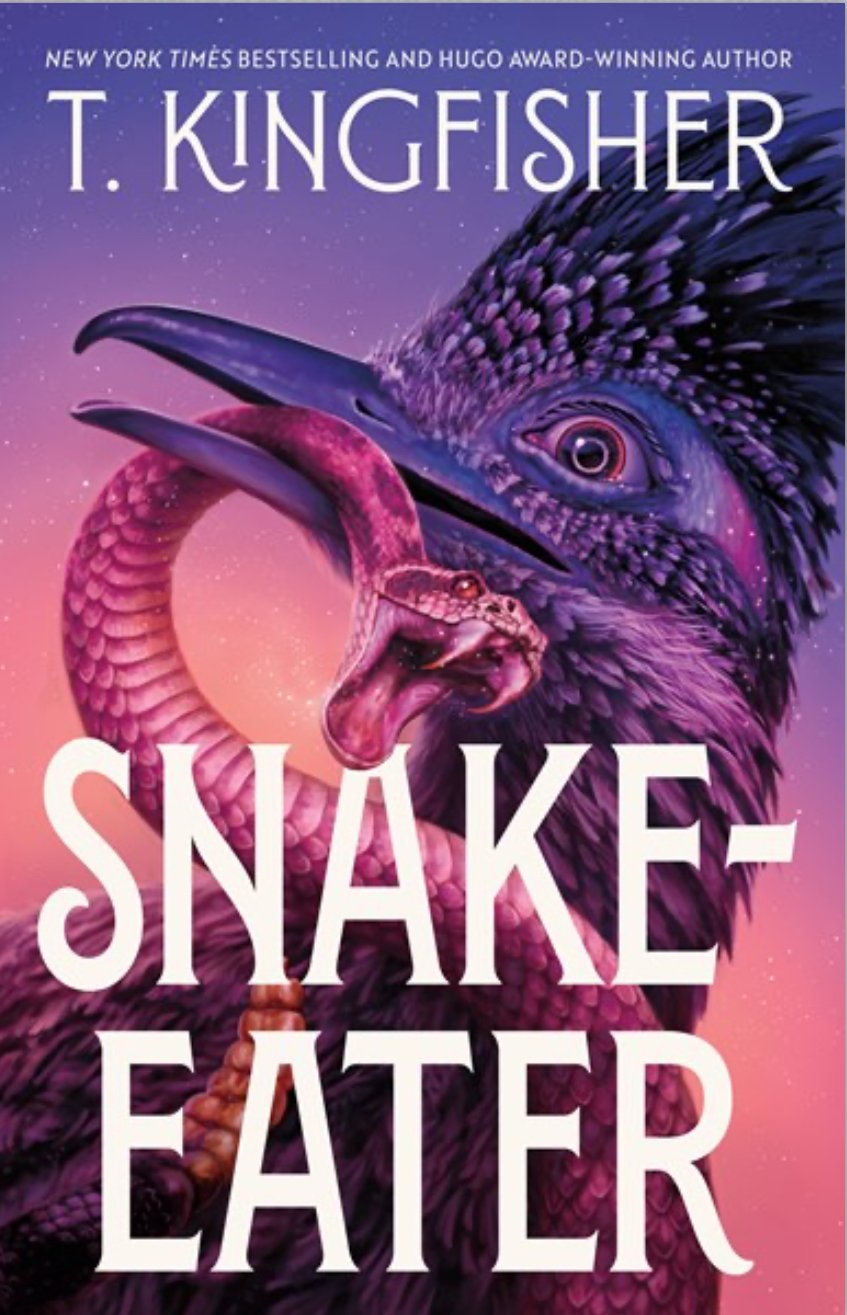
A Journey Through the Desert: Reflecting on Snake-Eater by T. Kingfisher
When I first stumbled upon T. Kingfisher’s Snake-Eater, I was instantly drawn in by its tantalizing premise—a woman rediscovering herself in a remote desert town, all while navigating the mystique and challenges of desert life. Having previously enjoyed Kingfisher’s work, I was eager to dive into this new adventure and explore how it would unfold in her signature blend of whimsy and horror.
In Snake-Eater, we follow Selena, a woman escaping the oppressive grip of her overbearing boyfriend, Walter. Her decision to travel to Quartz Creek, to claim her late aunt’s home, Jackrabbit Hole House, felt like a daring leap into self-discovery. Kingfisher’s portrayal of Selena’s evolution is both tender and relatable. You can almost hear the cicadas’ hypnotic chorus as she adjusts to life in the desert, a stark contrast to her previous city existence. The locals, particularly the charismatic Grandma Billy and the witty Father Aguirre, enrich the narrative, providing a sense of community that Selena desperately needs. Kingfisher crafts their interactions with humor and warmth, illuminating how human connections can transform one’s outlook.
Kingfisher’s writing style is effortlessly accessible, drawing readers into the story with every twist and turn, akin to navigating the famed Lombard Street in San Francisco. I found myself deeply empathizing with Selena, and the supporting characters felt fleshed out, adding depth and dimension to the desert’s eerie allure. However, the plot’s surreal elements—like the unusual antagonist, a roadrunner, and the talk of Snake-Eaters—may stretch the boundaries of believability for some. Still, I appreciated that Kingfisher dared to take these creative leaps, reflecting the story’s thematic push against the mundane.






One of the highlights of Snake-Eater lies in its exploration of self-empowerment and the journey toward inner peace. As Selena sheds her past, readers witness her transformation from a woman burdened by life’s complexities to one who embraces the unknown. Kingfisher’s delicate handling of this theme resonated with me on a personal level, reminding me of the importance of following one’s own path—even when it leads you into the metaphorical desert.
While I relished Snake-Eater, I must admit it didn’t capture my heart quite like The Twisted Ones. The former lacked some of the visceral terror that defined Kingfisher’s earlier work; however, it presented haunting beauty in a different light, amplifying subtler, introspective fears instead. The ethereal prose, along with the idea of the community harboring secrets, kept me enchanted throughout.
Overall, I highly recommend Snake-Eater to those seeking a gentle yet gripping tale of personal discovery infused with a hint of the uncanny. Whether you’re a fan of T. Kingfisher or new to her writing, you’ll find a richly crafted world that invites you to ponder your own metamorphosis. This book left me with a deeper appreciation for the courage it takes to embrace change and the warmth found in unexpected friendships. In the end, Snake-Eater is a gentle reminder that sometimes, you must venture into the unknown to truly find yourself.