
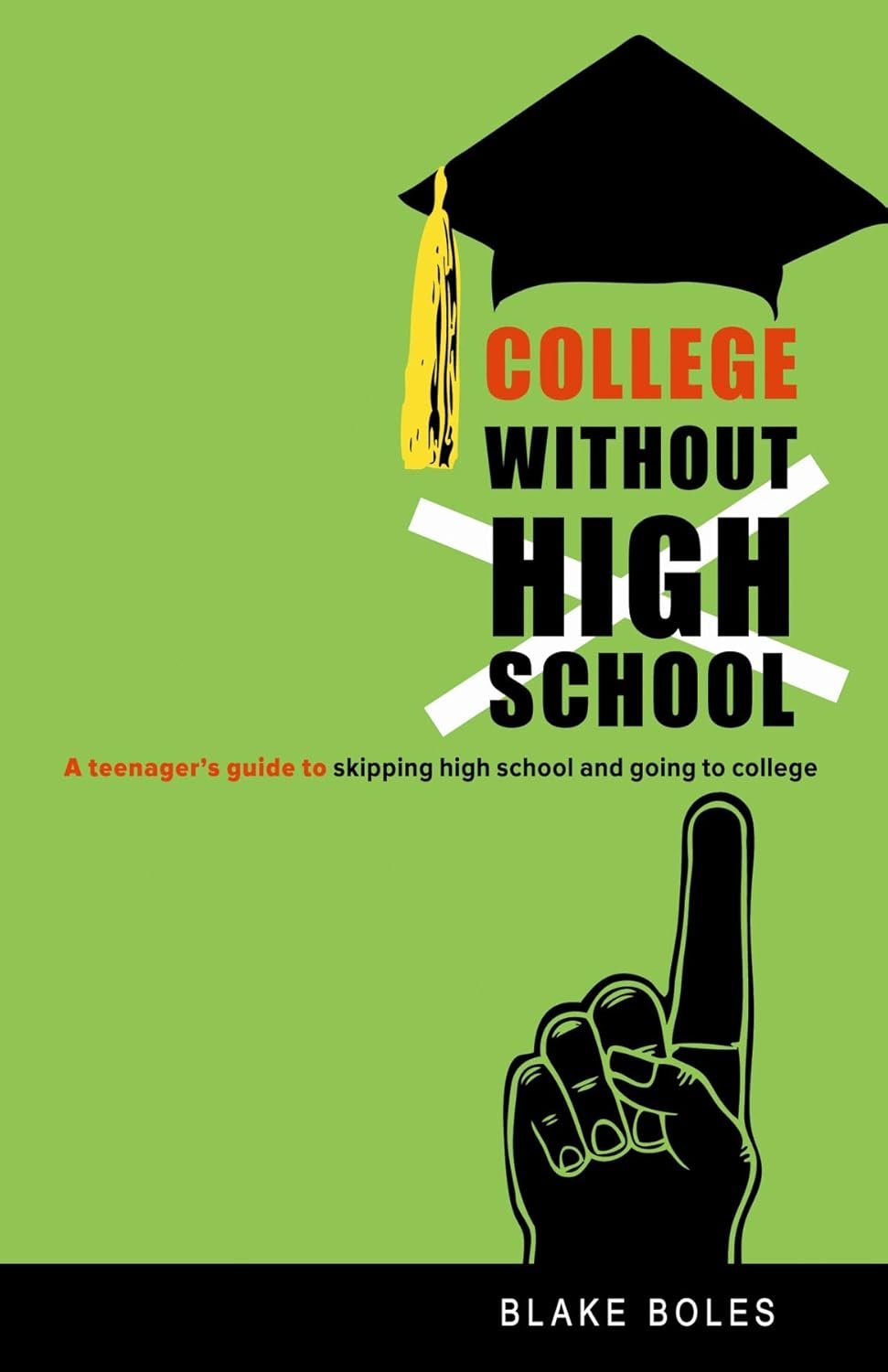
Exploring a Unique Path: My Thoughts on College Without High School by Blake Boles
As someone who constantly seeks out alternative educational experiences, the title College Without High School: A Teenager’s Guide to Skipping High School and Going to College by Blake Boles immediately piqued my interest. The idea of eschewing traditional schooling in favor of experiential learning—a concept not often explored—felt like a breath of fresh air. Boles’ approach to navigating the path from unconventional education to college is not just thought-provoking; it feels like an empowering manifesto for teens who are ready to forge their own educational journeys.
At its core, Boles’ book emphasizes the beauty of intellectual passion and leadership over the rigidity of conventional curricula. He illustrates that the college admissions process can be approached creatively, paving the way for students to present their unique experiences compellingly. More than a mere guide, this book becomes a blueprint for teenagers who may feel like square pegs in round holes within the traditional education system. As I turned each page, I found myself resonating deeply with the stories of various homeschoolers, unschoolers, and their distinctive paths to higher education.


What stands out is Boles’ engaging writing style. He balances motivational insights with practical advice, making for a seamless, encouraging read. One moment, he’s pointing out the significance of documenting a student’s personal journey; the next, he offers strategic tips for ensuring their application reflects not just their academic achievements but also their passions and values. It’s this blend of encouragement and actionable guidance that makes the book resonate so strongly.
A notable highlight for me was Boles’ emphasis on leadership and creativity as cornerstones of a strong college application. His assertion that a compelling portfolio showcasing individual experiences and creative endeavors can speak louder than traditional grades struck me. “Your education is what you make of it,” he reminds readers, a quote that continues to echo in my mind long after finishing the book.
The encouragement from previous readers reinforces Boles’ impact; testimonials from parents and teens alike discuss how this book transforms perspectives on education and provides a roadmap for choosing a less trodden path to college. Many found it not only informative but also an inspiration to take control of their learning.
Reflecting on my journey through College Without High School, I believe this book would be ideal for students disillusioned with conventional schooling, parents considering homeschooling, or anyone interested in redefining success in education. It encourages budding scholars to embrace their individuality, advocate for their passions, and reimagine their learning experiences in a way that fits their unique identities.
In closing, Boles’ work feels timely and necessary, especially in a world ripe for educational reform. It prompted me to consider my own beliefs about learning and the variety of paths that can lead to personal and academic fulfillment. For anyone contemplating the intersection of education and individuality, this book is not just a read; it’s a journey worth taking.