
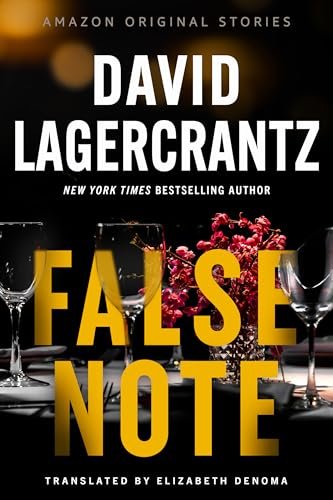
Review of False Note (Alibis Collection, #3)
When I first picked up False Note, I was excited. The premise—a son grappling with the legacy of his father’s murky past as a renowned opera singer—intrigued me, especially given the weighty themes of fame, family secrets, and emotional turmoil. Written by the author known for continuing Stieg Larsson’s Millennium series, I hoped for a return to richly crafted characters and compelling narratives. However, as I dove into the pages, my excitement waned, and I found myself navigating a symphony that struck a false note throughout.
Plot and Themes
At the heart of the story is William, a man overshadowed by his father’s theatrical fame and personal demons: vanity, alcohol abuse, and cruelty. The setup had so much promise—William’s adult life intertwined with echoes of his father’s turbulent past, and the idea that his girlfriend, Ebba, wanted to confront these ghosts should offer a ripe backdrop for conflict and character development. Unfortunately, what I found instead was a gathering of flat characters held together by predictable plot lines lacking in depth.


William and Ebba’s relationship could have served as a lens for exploring the cycles of trauma and healing, but much of that nuance was lost as the narrative unfolded. The cast felt like caricatures more than complex individuals; their motivations remained shadowy and poorly defined. As one of my personal pet peeves, the unreliable first-person narration grated on me, drawing me away from William’s journey rather than into the heart of his struggles.
Writing Style and Pacing
On the upside, False Note is a fast read. The pacing is brisk, making it easy to consume in one sitting, which I appreciated, especially with life’s usual distractions. I zipped through the story in about half an hour, curious enough to see where it would land despite having already anticipated a lot of the dissatisfaction that awaited me. However, the lack of resolution left me feeling more vexed than fulfilled. The ending took a turn that was unexpected, yet I found myself at a loss as to how it resonated within the larger narrative.
Highlights and Critiques
Despite the shortcomings, I wasn’t entirely bored. The story’s energy kept me flipping pages, but annoyance grew as I realized none of the characters evoked empathy or growth. Personal growth or even a hint of self-awareness would have elevated the narrative. Instead, we’re left with a cavalcade of “daddy issues,” where every character seems stuck in familial cycles without any hint of breakage or transformation.
With frequent mentions of Stockholm that seldom contributed to the atmosphere, I pondered whether the author, who resides in the city, was hinting at themes like Stockholm Syndrome. Yet, the location felt underutilized, serving as mere backdrop rather than an integral part of the story.
In the end, I couldn’t shake the feeling that False Note had the potential for depth but fell short. While it may find a place as a quick, one-time read for those seeking something uncomplicated, it lacked the intricacy and resonance I long for in literature.
Conclusion
If you’re a casual reader looking for a brisk narrative to fill an afternoon, False Note might be worth the while. But for those who seek profound character exploration and rich storytelling, I’d recommend looking elsewhere. This experience has made me reconsider my interest in continuing with this author. With a mere two stars in the rating, I can’t say False Note will be on my recommendations list anytime soon.
Thank you for joining me on this reading journey—let’s hope our next literary adventure strikes a more harmonious chord!
Discover more about False Note (Alibis Collection, #3) on GoodReads >>